


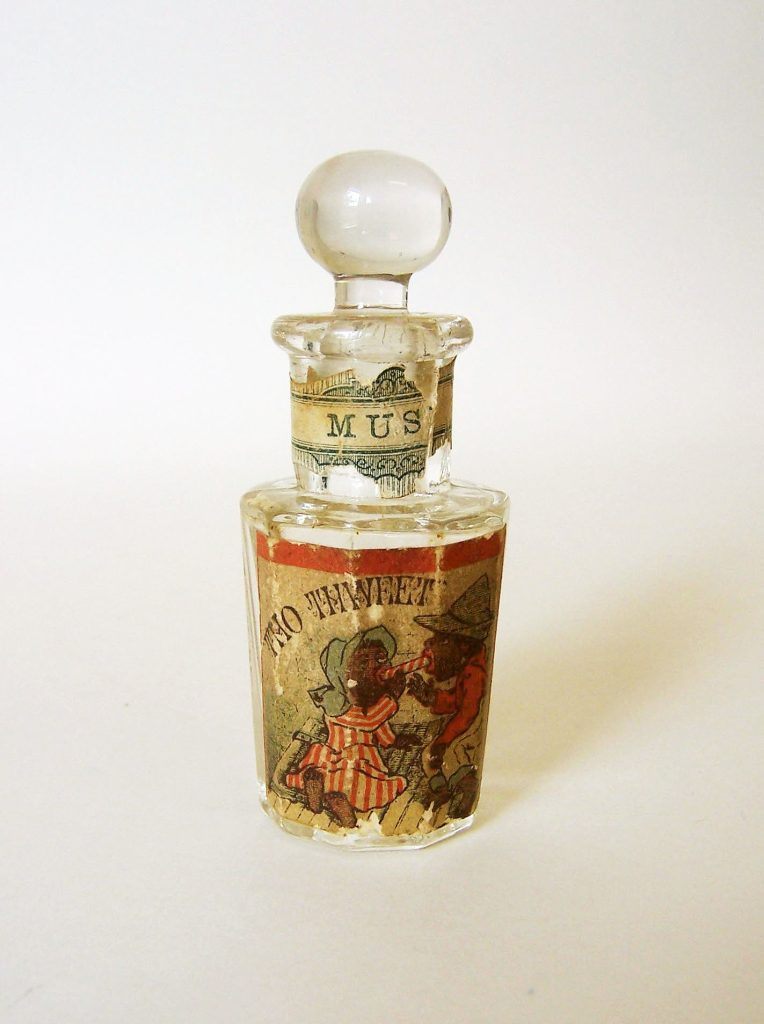
In 1878 in New York City, a perfume company was founded under the name of Corning-Tappan. The founder of the company was named Herman Tappan. The origination of the Corning part of the name is not clear, but perhaps it had a relationship to the town of that same name in New York, famous for glass production. From 1878 to about 1930 the company issued 56 perfumes and presentations and underwent a name change to the Herman Tappan Company some time before 1908. Among this list of perfume names is one of my personal favorites “Tho Thweet”, from 1880. The dates cited are only approximate due to the very poor documentation for this American company.
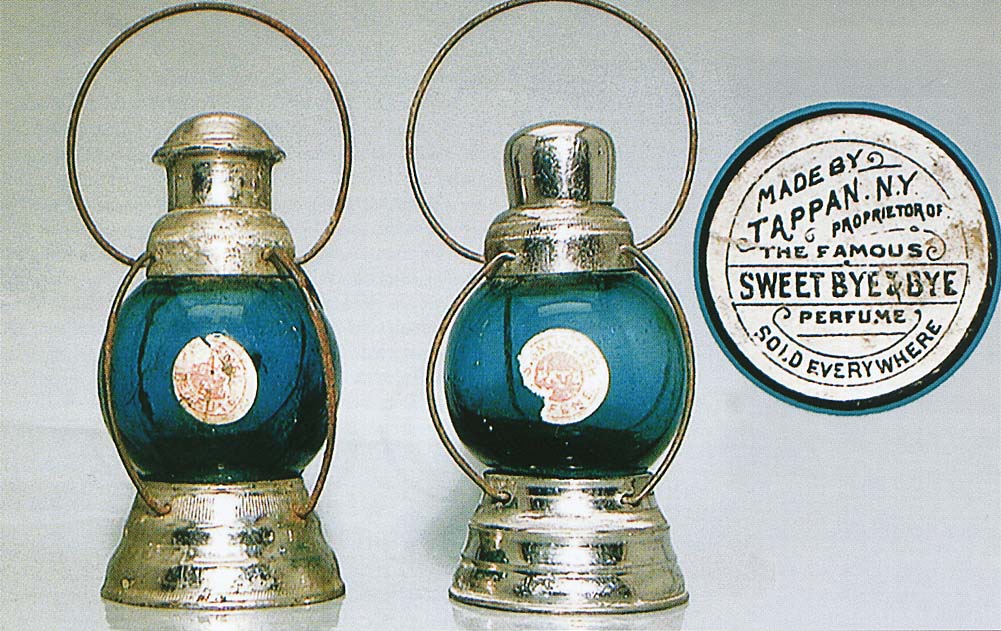
The Tappan Company is important to the history of American perfumery because of its imaginatively designed figural perfumes made during the 1878-1910 era. These figural perfumes were issued design patents, as will be seen. Most perfume collectors have seen at least one of the novelties issued by this company. Possibly the most common novelty is the kerosene railroad lantern in green or clear glass for the scent “Sweet Bye & Bye” in the presentation called “Signal Flash” seen here in two variations of glass mold and metal cap.
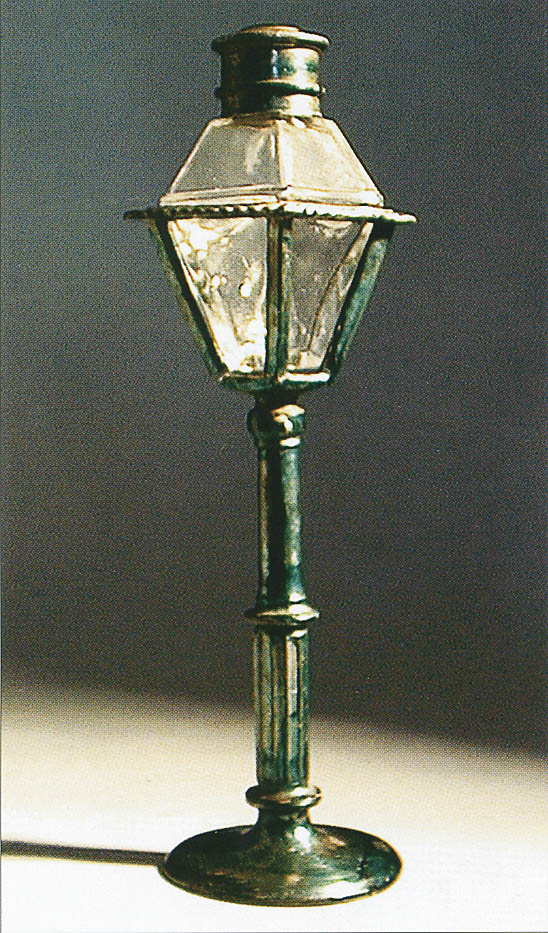
Albert Revi, in his major work on American figural glass bottles, which is based on United States Patent Office records, shows the street lamp (often referred to by collectors as the “Beacon”). The “Street Lamp” was patented in 1892 and designed by John E. Warren Jr. of Newark, New Jersey.
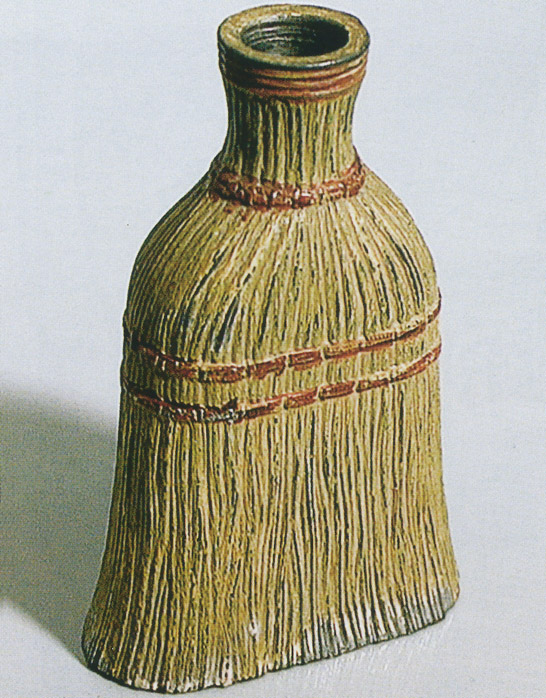
The whisk broom called “Clean Sweep” (cf. Monsen & Baer Perfume Bottle Auction II, 1992, p. 64) was patented in 1887 and was designed by Ellene A. Bailey of New York City. Revi does not attribute a maker or name to this item, but the bottle has its original label.
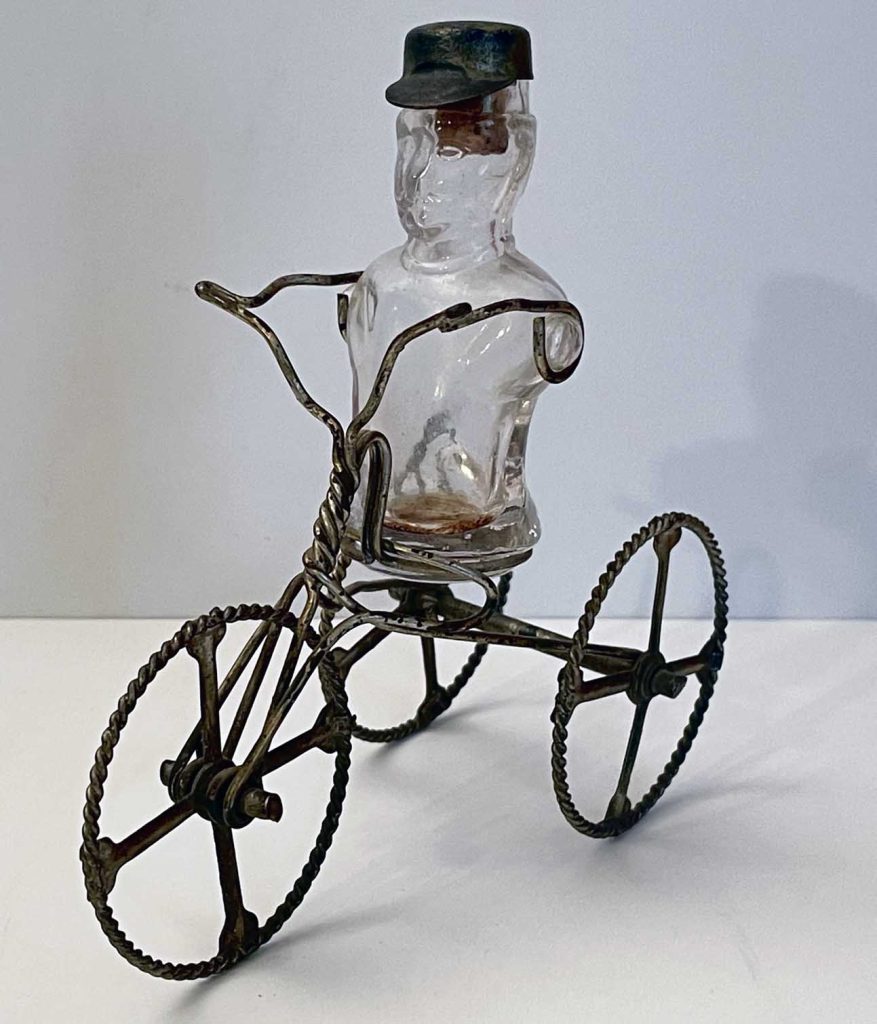
The man on the tricycle is known to exist in only a very few examples, but the man has not been documented as a perfume bottle and is known to us only from its picture in the patent record. The tricycle was patented in 1892 and was designed by Jacob Markel of New York.
Revi also cites a world globe perfume by Herman Tappan. This world globe perfume called “World’s Fair”, patented in 1890, was for the 1893 Columbian Exposition which commemorated the arrival of Columbus in America. (Columbus arrived in 1492, of course, but the fair to commemorate his landing did not arrive on time, and actually opened in 1893). The man on the bicycle holding the scent “Sweet Bye & Bye” and the “World’s Fair” figural are pictured in “Perfume Presentation ” by Ken Leach.
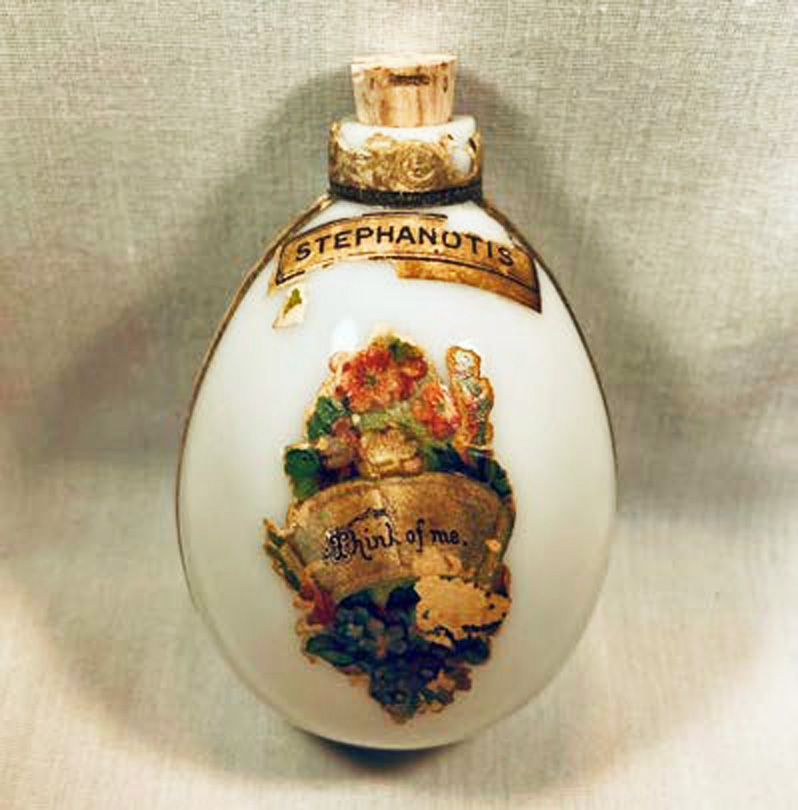
The company also produced less well-known figural bottles. An Easter Egg in thick-walled milk glass and with Victorian style “scrap” labels for “Rose Geranium” or “Stephanotis” had the designation of Corning-Tappan on a bottom label, which is actually a private die perfumery stamp. The stamp says “U.S. Int. Rev. 1c” and “Corning & Tappan”. These proprietary tax stamps were used form 1864-1881, and although approved by the government, they were actually printed by each company for use on their own perfumes. These stamps were authorized under the Revenue Act of 1862 and the moneys raised went to defray expenses of the Civil War. The stamps to be used were to be adhered to boxes or packages of matches, playing cards, medicines or perfumes in such a way that when opened, the stamp would be destroyed. The revenue stamp of the Corning-Tappan egg would hence date the bottle to 1978-1881. (As an aside, it should be noted that these private die perfumery stamps are themselves avidly collected by stamp collectors, and many of them are extremely scarce.) The cited chromolithographed scrap pictures were sold to Victorian ladies for home craft projects, or to put in scrapbooks, but were also used commercially for paper Valentines and on perfumes.
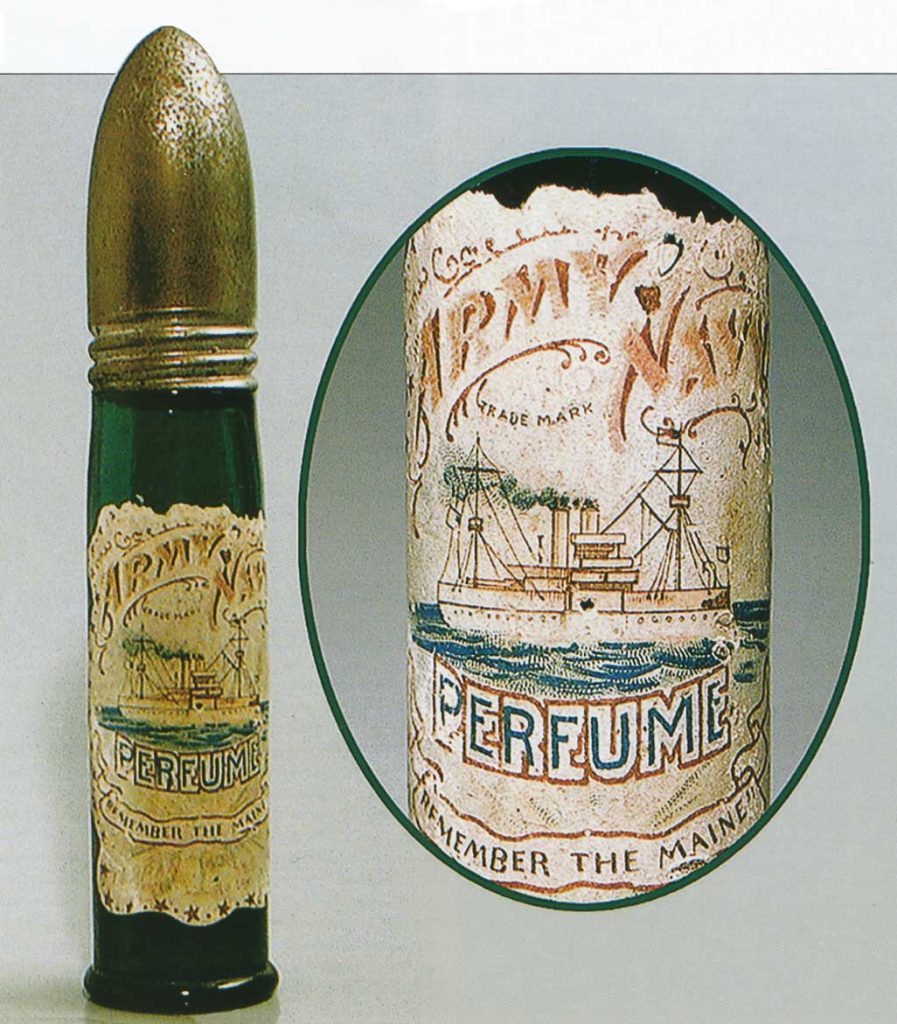
The Tappan artillery shell “Army Navy” in green glass with metal overcap and green ground-glass inner stopper is directly tied to the Spanish American war of 1898, with the slogan on the perfume of “Remember the Maine”.
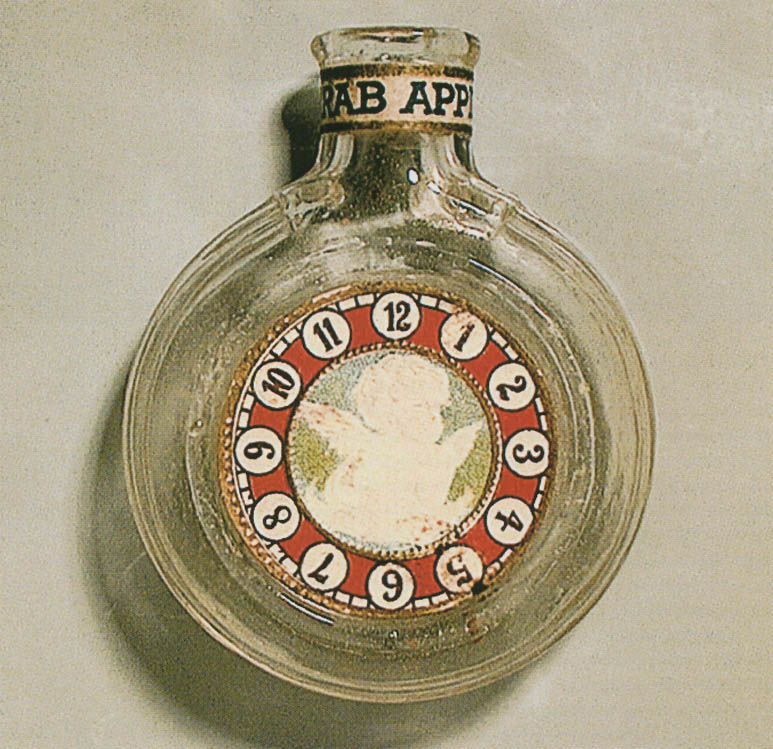
Another scarce Tappan novelty is the glass watch figural perfume issued for both the scent “Little Tot” and “Crab Apple”. The watch is further identified by the embossed letter “T” in the glass on the back.
Beyond these charming novelties, the company issued fine quality perfume bottle sets in burgundy velvet and satin caskets so popular with the Victorians. These sets can be identified by the “HT” letters standing in monogram of three dimensional glass cut-outs on the stopper (see Perfume Bottle Quarterly Vol. VII, #4.) It is important to note that most Tappan bottles have this monogram or the single letter “T” as part of the product identification.
It is also known that the company issued glass shoes in clear crystal and colors (see Yalom, “Shoes of Glass”). Yalom shows high button shoes trademarked with the “HT” monogram with the words “Trademark” circling the letters; another has the words “Bouquet Holder” molded in the glass. This book has three citations of glass shoes by Tappan, but does not mention perfume, or that Herman Tappan was a company, but the items are dated to 1886 by trademark. Other Tappan glass shoes exist in the daisy and button pattern, which held tiny matching bottles of perfume, and had the words “Patent Pending” molded into the bottom of the glass shoes. These shoes shave been extensively reproduced in modern times, however the reproductions do not carry any of those words on the bottom.
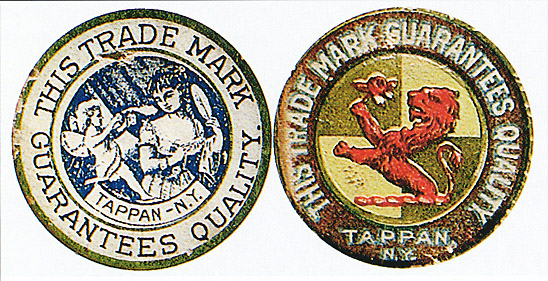
The history of Herman Tappan is also documented by trade cards and other types of paper ephemera. The paper items are relatively uncommon. A paper quality seal is shown here with a rampant lion. Another paper logo replicates the earlier private die perfumery stamp design. It illustrates Cupid “spritzing” the Victorian lady at her toilette.
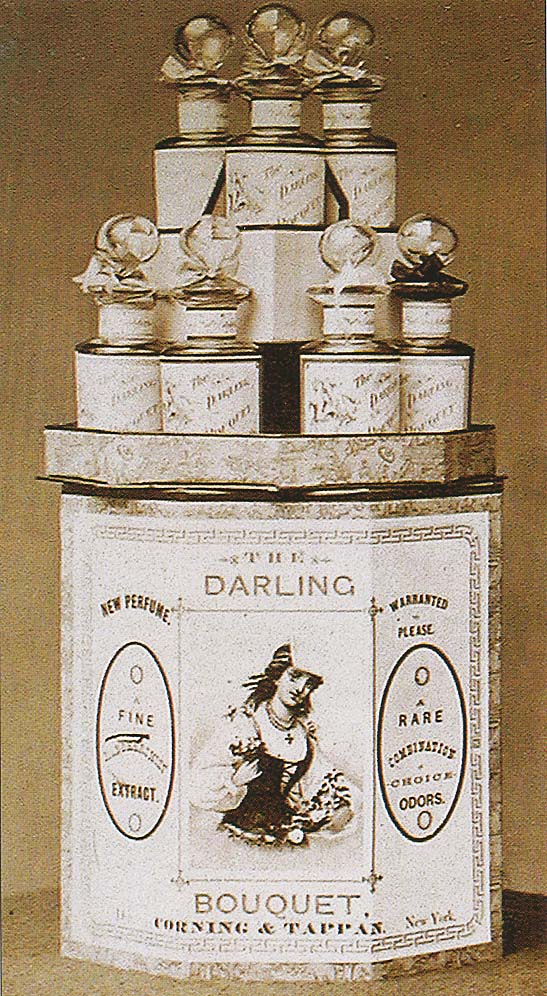
The “carte de visite” photograph from about the year 1890 has the company name as Corning-Tappan, and shows seven bottles of “The Darling Bouquet” in a point of purchase display.
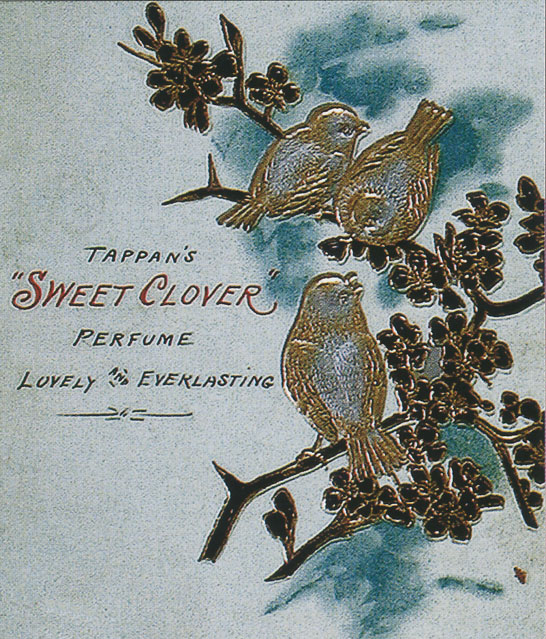
A wonderful Victorian period chromolithograph card for the scent “Sweet Clover” with birds and flowering branches embossed in relief is from about 1880.
By 1908 the United States trademark directory calls the company Herman Tappan only. Genealogical research into the prolific Tappan family of New York has uncovered several Hermans, but none seem to have been the one who founded the perfume company. More information about this company would be exciting to discover.
References:
* Leach, Ken. “Perfume Presentation”, Toronto: Kres Publishing, 1997.
* Monsen, Randall. Complete Figural Perfume Bottles: Metaphors in Glass. “Monsen & Baer Perfume Bottle Auction II, 1992.
* Revi, Albert. “American Pressed Glass and Figure Bottles”. New York: Thomas Nelson, 1964.
* Treasures Found. “Perfume Bottle Quarterly, Vol VII, #4, 1995, p. 24.
* Yalom, Libby. “Shoes of Glass”. Marietta, Oho: Antique Publications, 1988.
Source: “Tappan: An Elusive American Perfumer” article by Helen Farnsworth, PBQ Spring 2000.
See Tappan Items in our Virtual Museum.


